
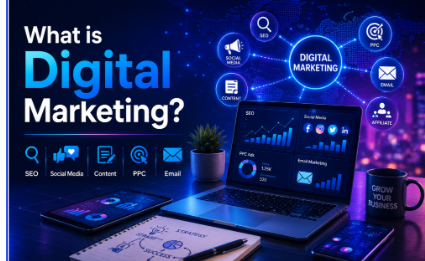
In today’s fast-changing digital world, businesses are no longer limited to traditional marketing methods like newspapers, television, or radio. Millions of people use the internet every day to search for products, services, and information. This has made Digital Marketing one of the most valuable skills for students, job seekers, entrepreneurs, freelancers, and business owners. Whether you want to build a successful career or grow your own business, learning digital marketing can open countless opportunities.
Unlike traditional marketing, digital marketing allows businesses to reach the right audience, measure campaign performance, and improve results with data. It is cost-effective, highly targeted, and suitable for businesses of every size. As technology continues to evolve, companies are looking for skilled digital marketers who can help them build their online presence and increase sales.
🔵 Why Learn Digital Marketing?
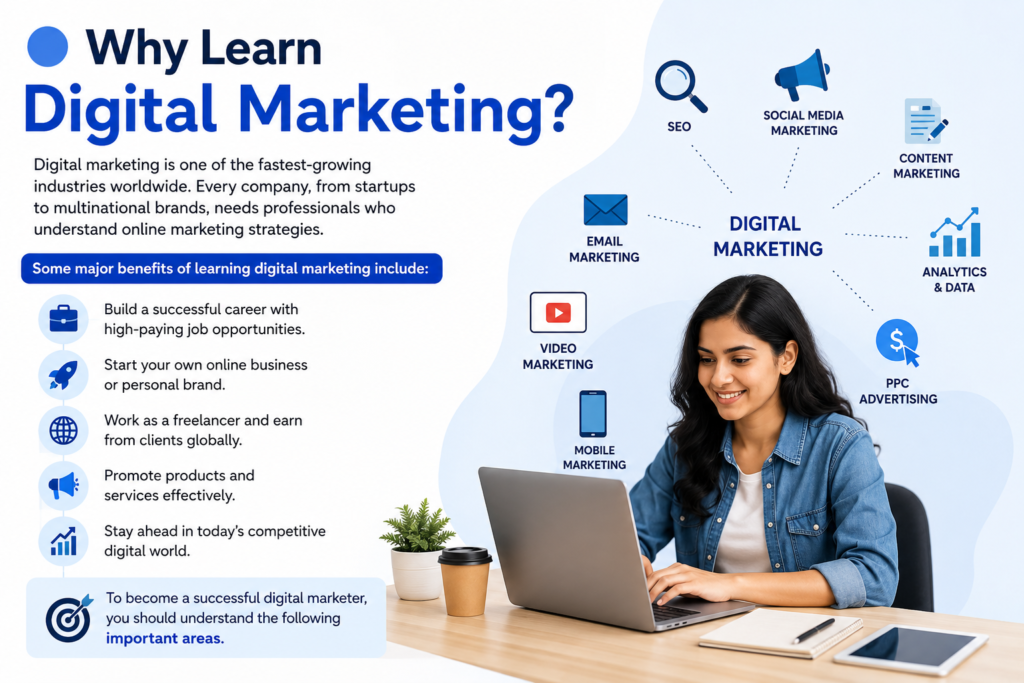
Digital marketing is one of the fastest-growing industries worldwide. Every company, from startups to multinational brands, needs professionals who understand online marketing strategies.
Some major benefits of learning digital marketing include:
- Build a successful career with high-paying job opportunities.
- Start your own online business or personal brand.
- Work as a freelancer and earn from clients globally.
- Promote products and services effectively.
- Stay ahead in today’s competitive digital world.
To become a successful digital marketer, you should understand the following important areas.
🔵 1. Search Engine Optimization (SEO)
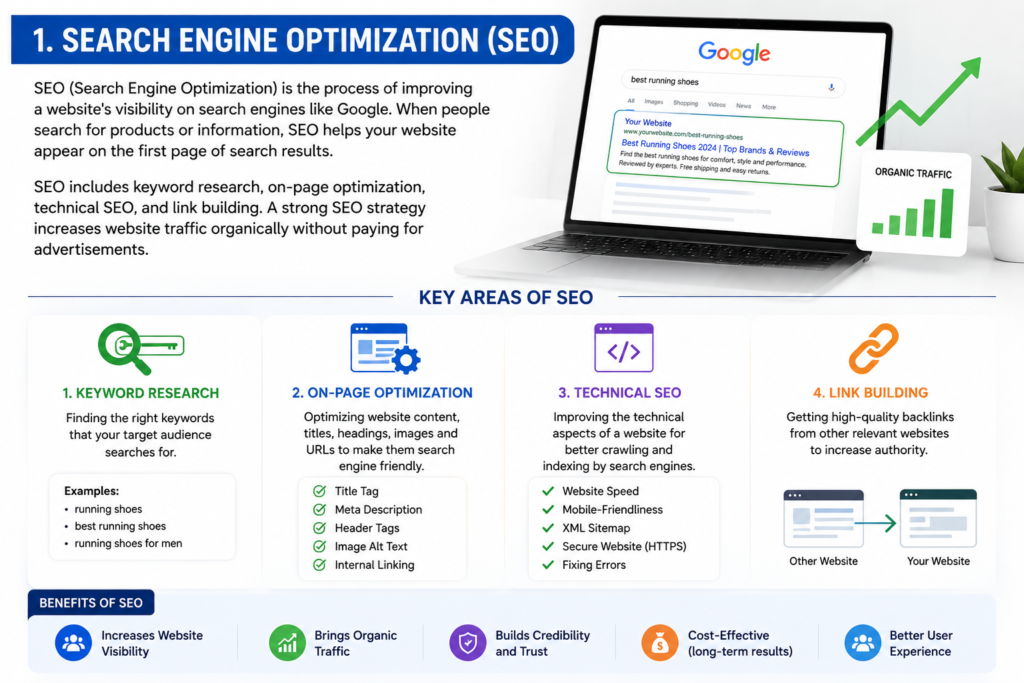
SEO (Search Engine Optimization) is the process of improving a website’s visibility on search engines like Google. When people search for products or information, SEO helps your website appear on the first page of search results.
SEO includes keyword research, on-page optimization, technical SEO, and link building. A strong SEO strategy increases website traffic organically without paying for advertisements.
🔵 2. Social Media Marketing (SMM)
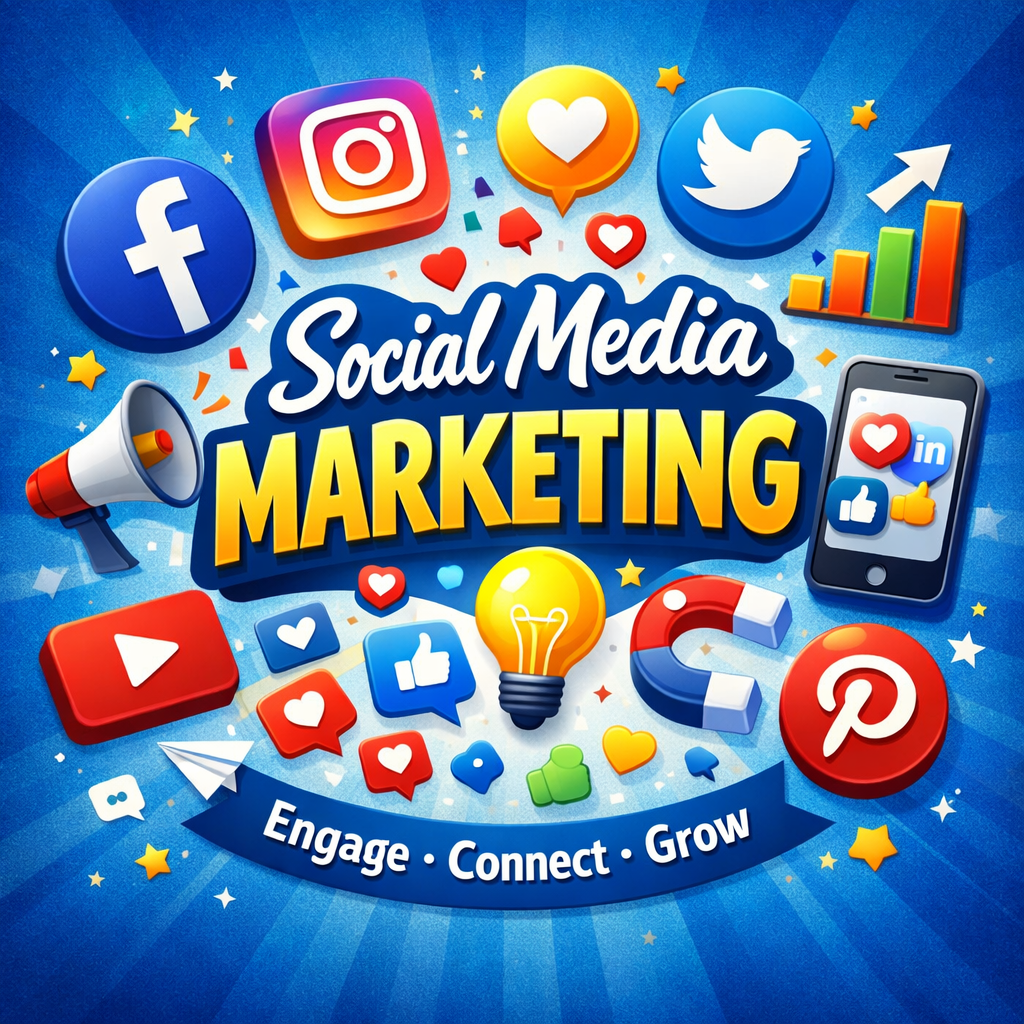
Social Media Marketing involves promoting businesses through platforms like Facebook, Instagram, LinkedIn, X (Twitter), Pinterest, and YouTube.
It helps brands connect with their audience, increase engagement, build trust, and generate leads. Regular posting, creative content, and audience interaction are the keys to successful social media marketing.
🔵 3. Content Marketing
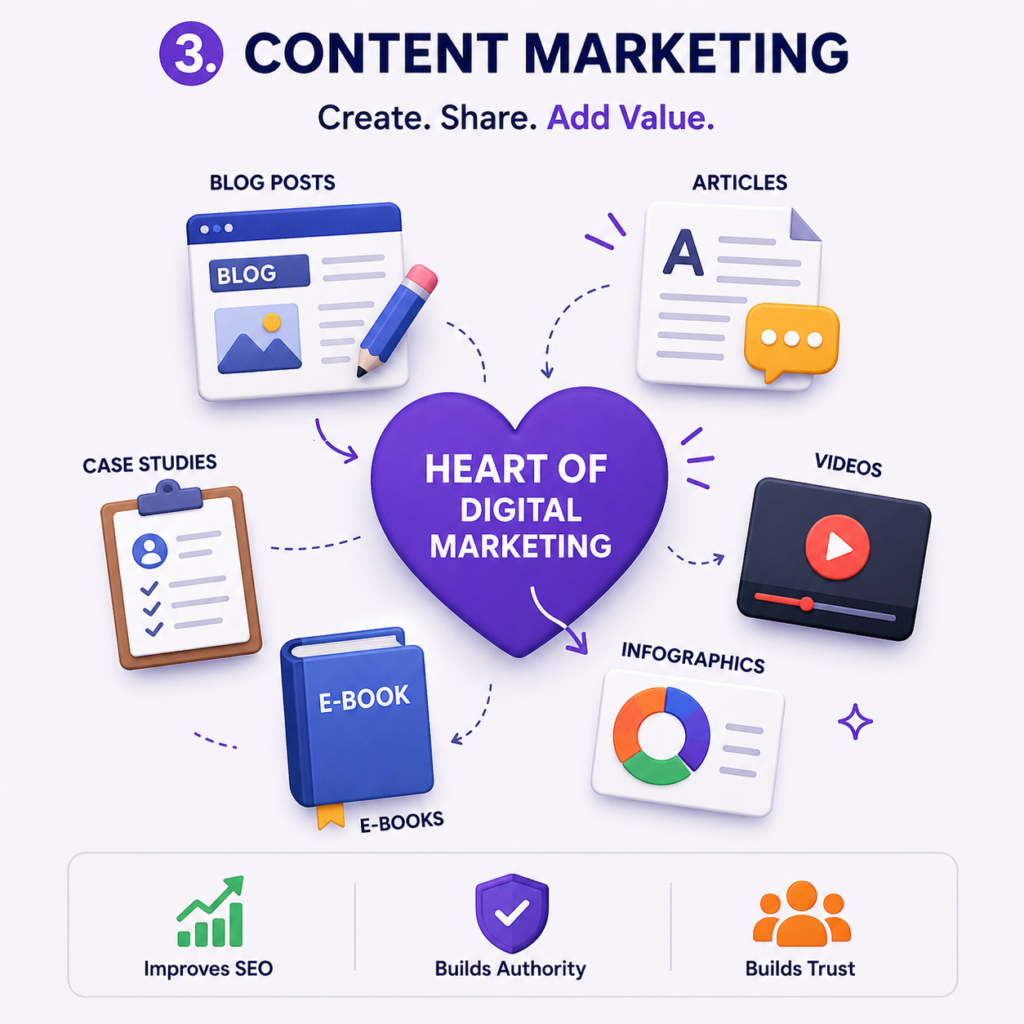
Content Marketing is considered the heart of digital marketing. It focuses on creating valuable content that educates, entertains, or solves customer problems.
Examples include:
- Blog Posts
- Articles
- Videos
- Infographics
- E-books
- Case Studies
High-quality content improves SEO, builds authority, and encourages customers to trust your brand.
🔵 4. Pay-Per-Click (PPC) Advertising
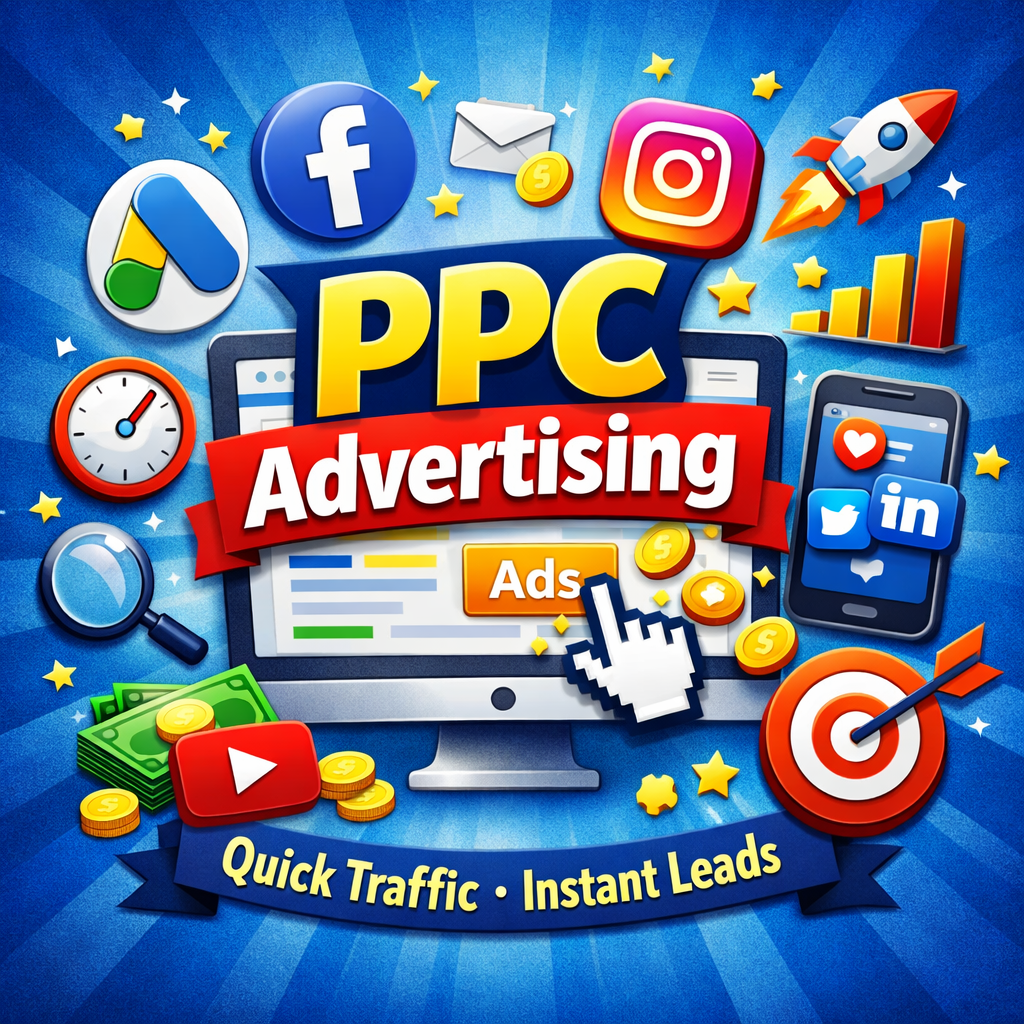
PPC Advertising allows businesses to display paid advertisements on search engines and social media platforms.
Popular PPC platforms include:
- Google Ads
- Facebook Ads
- Instagram Ads
- LinkedIn Ads
Unlike SEO, PPC delivers immediate traffic and helps businesses generate leads quickly when campaigns are properly optimized.
.
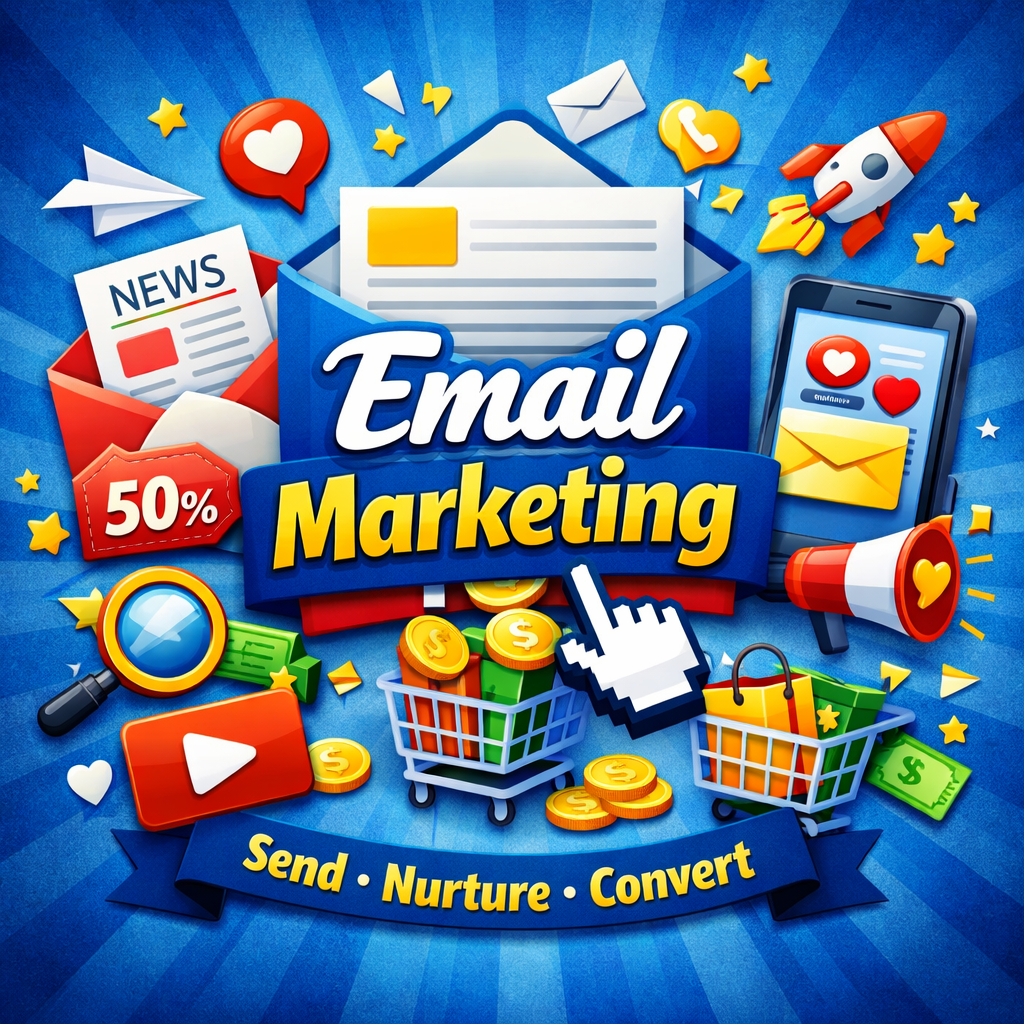
🔵 5. Email Marketing
Email Marketing remains one of the highest ROI (Return on Investment) marketing channels.
Businesses use email campaigns to:
- Share offers
- Send newsletters
- Promote products
- Build customer relationships
- Increase repeat sales
Personalized emails generally achieve better engagement than generic promotional messages.
🔵 6. Video Marketing
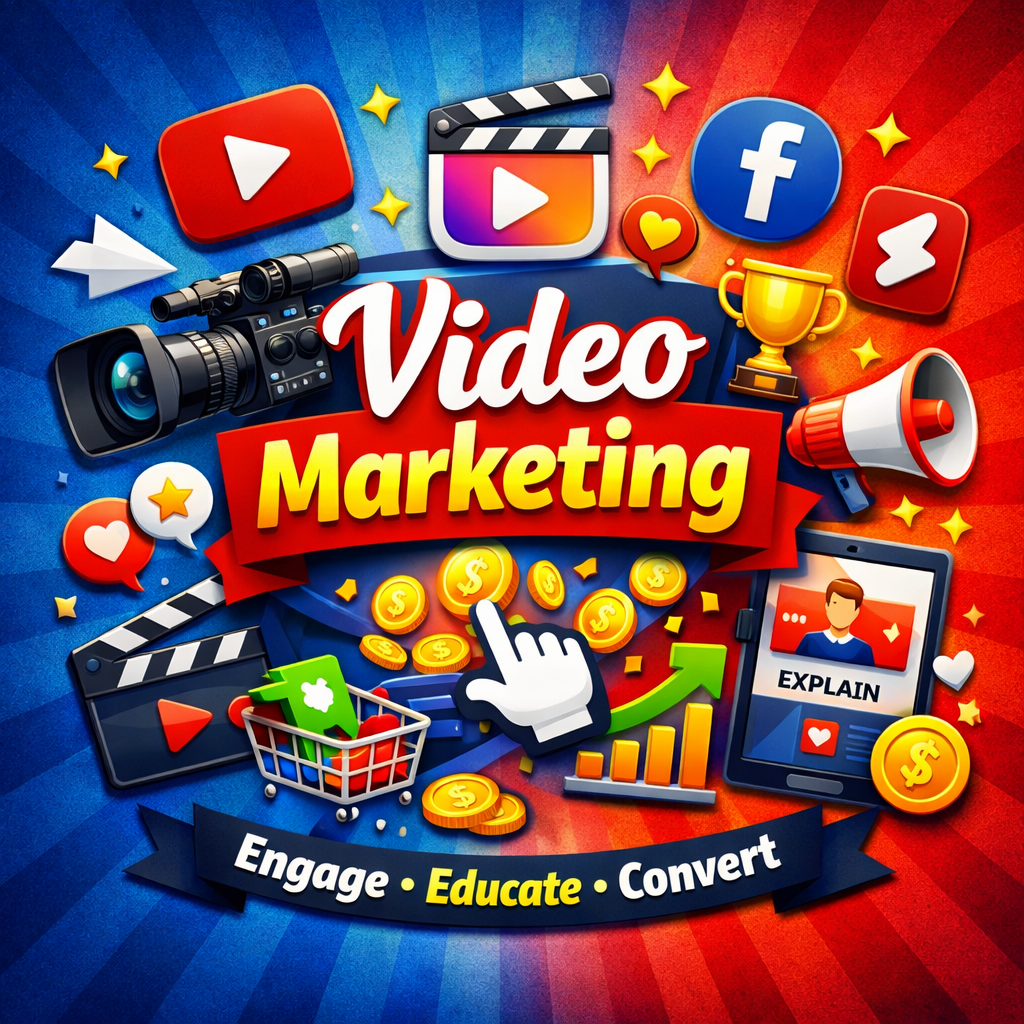
Video has become one of the most powerful forms of online content. Platforms like YouTube, Instagram Reels, Facebook Videos, and Shorts have changed the way people consume information.
Video marketing helps businesses:
- Explain products easily
- Increase engagement
- Improve brand awareness
- Boost conversions
Educational videos, tutorials, product demonstrations, and customer testimonials perform exceptionally well.
🔵 7. Mobile Marketing
Since most internet users browse through smartphones, Mobile Marketing has become essential.
It includes:
- SMS Marketing
- Mobile Apps
- Push Notifications
- Mobile-Friendly Websites
- In-App Advertising
Businesses that optimize their marketing for mobile users usually achieve better customer engagement.

🔵 8. Analytics & Data
One of the biggest advantages of digital marketing is that every campaign can be measured.
Using tools like Google Analytics, marketers can monitor:
- Website visitors
- User behavior
- Traffic sources
- Conversion rates
- Campaign performance
Data-driven decisions help improve marketing strategies and maximize results.

🔵 9. Affiliate Marketing
Affiliate Marketing is a performance-based marketing strategy where affiliates earn commissions by promoting products or services.
It benefits both businesses and marketers because companies only pay when a sale or lead is generated.
Many bloggers, YouTubers, and influencers earn significant income through affiliate marketing.
🔵 10. Marketing Automation
As businesses grow, managing every marketing task manually becomes difficult.
Marketing Automation tools help automate:
- Email campaigns
- Social media scheduling
- Customer follow-ups
- Lead nurturing
- Marketing workflows
Automation saves time, improves efficiency, and increases productivity.
Automation saves time, improves efficiency, and increases productivity.
🔵 Conclusion
Digital marketing is more than just a marketing technique—it is a valuable career skill that offers endless growth opportunities. By learning SEO, Social Media Marketing, Content Marketing, PPC Advertising, Email Marketing, Video Marketing, Mobile Marketing, Analytics & Data, Affiliate Marketing, and Marketing Automation, you can build a rewarding career or successfully grow your business online.
The digital world continues to expand every day, making digital marketing one of the smartest skills to learn in today’s competitive market. Whether your goal is to secure a high-paying job, start freelancing, or grow your own business, investing your time in digital marketing education can create long-term success.