Introduction
In today’s digital world, having a strong online presence is no longer optional—it’s essential. In 2026, customers expect every business to have a website where they can learn about products, services, pricing, and contact details. Whether it’s a local clothing store, restaurant, coaching center, salon, or startup, a professional website helps businesses build trust and reach more customers.
Many small business owners still believe that social media alone is enough. While platforms like Instagram and Facebook are useful for marketing, they cannot replace a professional website. A website gives your business credibility, works 24/7, and helps customers find you anytime. Let’s explore why every small business should invest in a website in 2026.

What Is a Business Website?
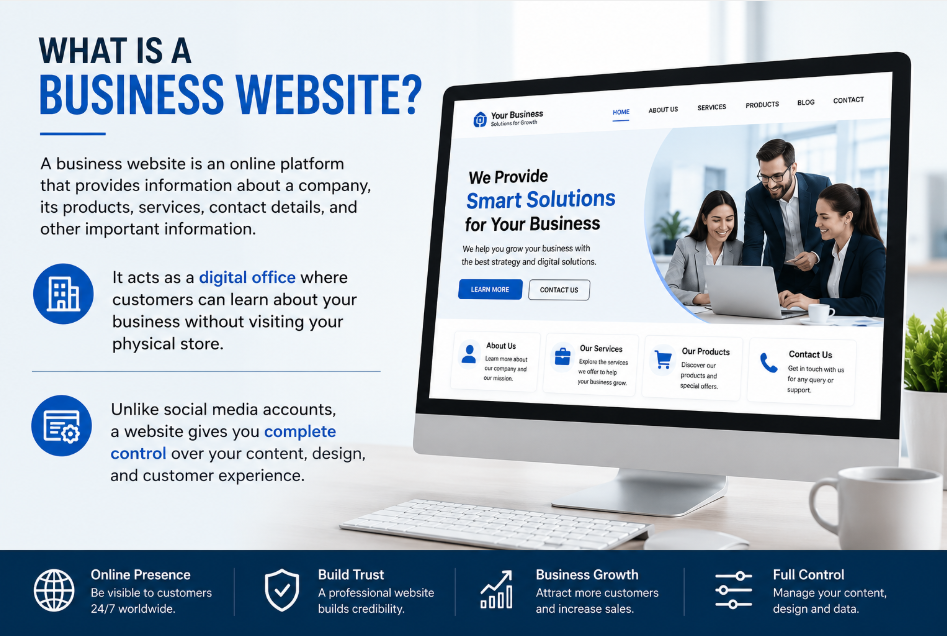
A business website is an online platform that provides information about a company, its products, services, contact details, and other important information. It acts as a digital office where customers can learn about your business without visiting your physical store.
Unlike social media accounts, a website gives you complete control over your content, design, and customer experience.
1. Build Trust and Credibility
The first impression matters. When customers search for a business online, they often visit its website before making a purchase.
A professional website shows that your business is genuine, reliable, and trustworthy. It allows customers to view your services, business hours, contact information, customer reviews, and company background.
Businesses with well-designed websites are often seen as more professional than those that rely only on social media.

2. Reach More Customers Online
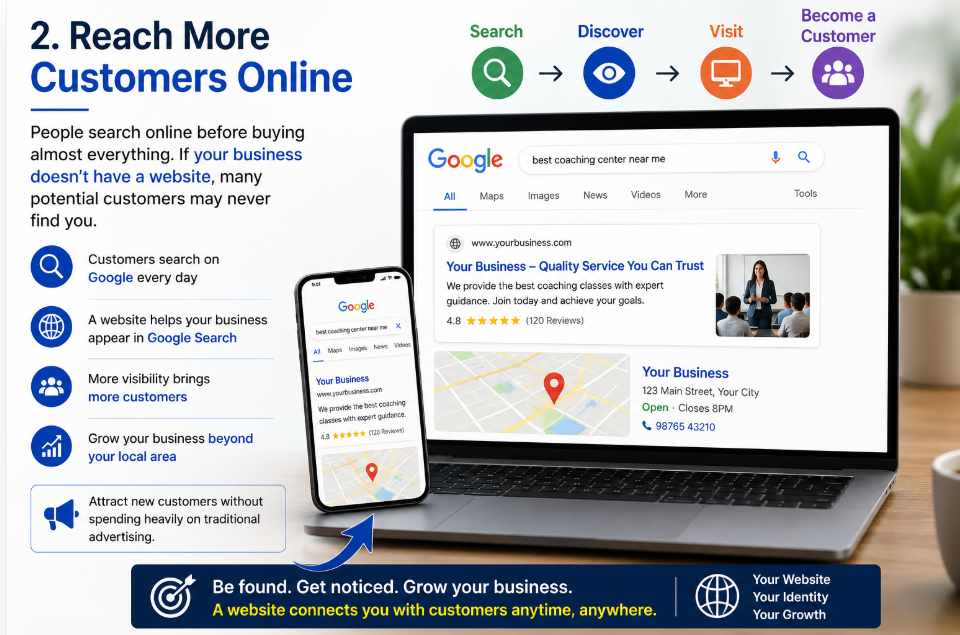
People search online before buying almost everything. If your business doesn’t have a website, many potential customers may never find you.
A website allows customers to discover your business through Google Search, increasing your visibility beyond your local area. This helps small businesses attract new customers without spending heavily on traditional advertising.
3. Your Business Is Open 24/7
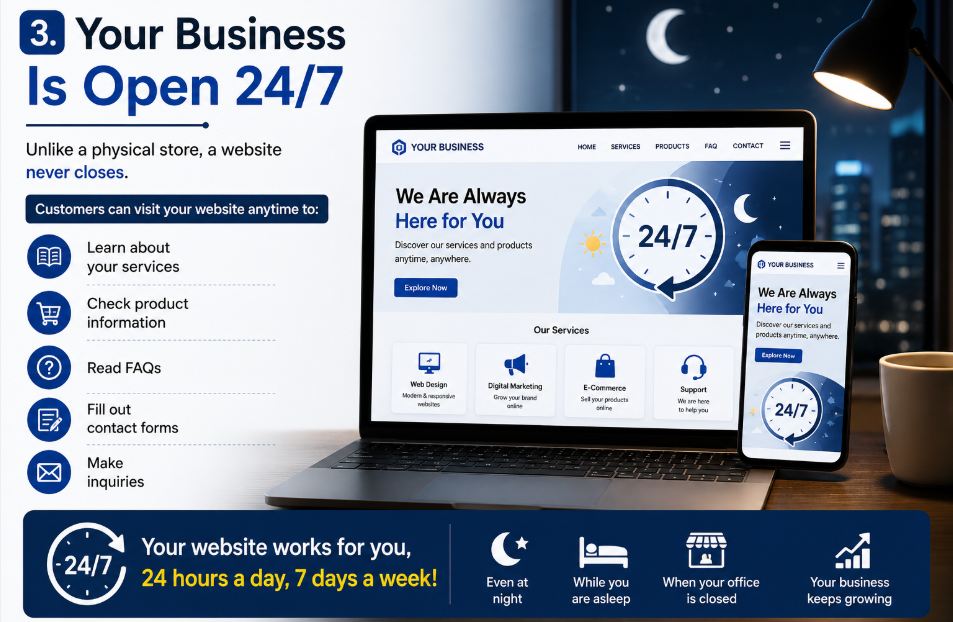
Unlike a physical store, a website never closes.
Customers can visit your website anytime to:
- Learn about your services
- Check product information
- Read FAQs
- Fill out contact forms
- Make inquiries
This means your business continues working even when you’re asleep or your office is closed.
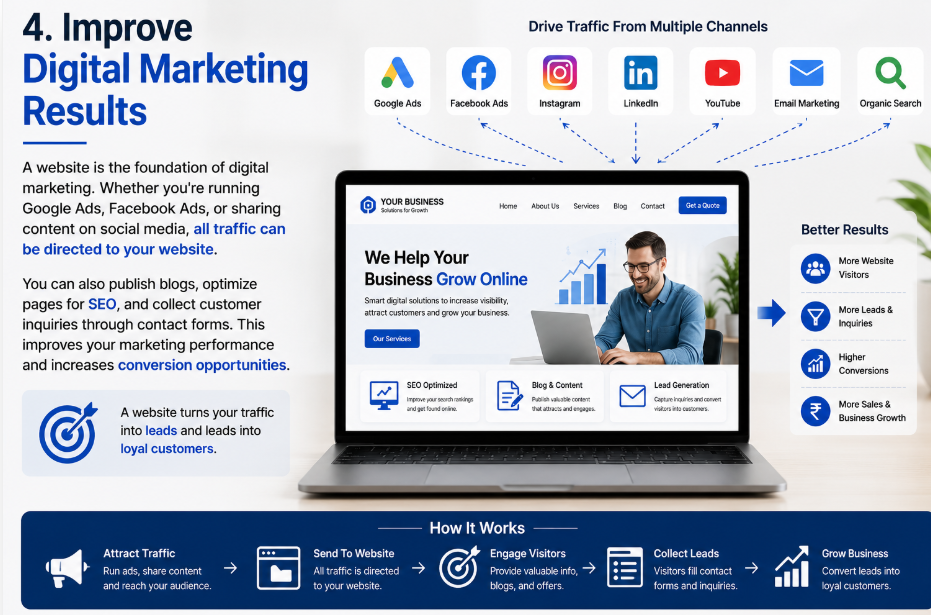
4. Improve Digital Marketing Results
A website is the foundation of digital marketing. Whether you’re running Google Ads, Facebook Ads, or sharing content on social media, all traffic can be directed to your website.
You can also publish blogs, optimize pages for SEO, and collect customer inquiries through contact forms. This improves your marketing performance and increases conversion opportunities.
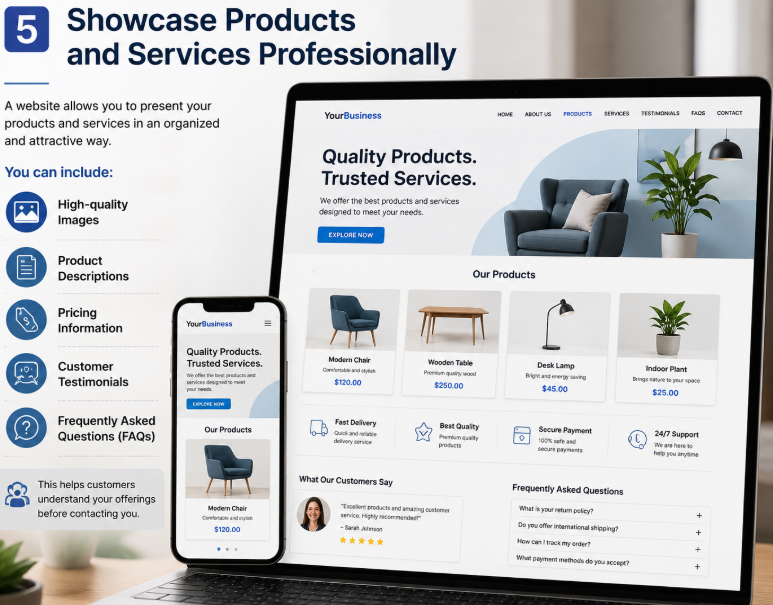
5. Showcase Products and Services Professionally
A website allows you to present your products and services in an organized and attractive way.
You can include:
- High-quality images
- Product descriptions
- Pricing information
- Customer testimonials
- Frequently Asked Questions (FAQs)
This helps customers understand your offerings before contacting you.
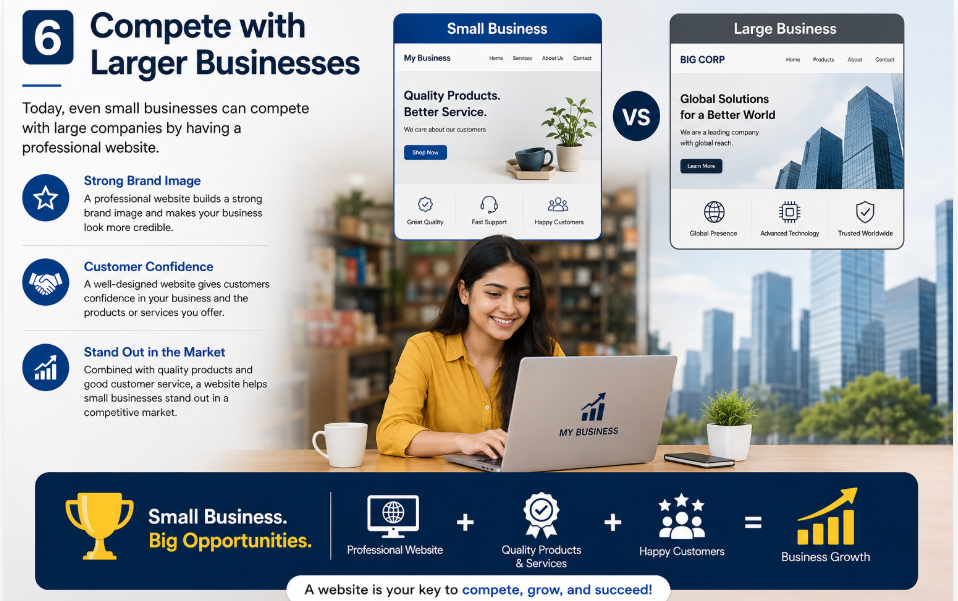
6. Compete with Larger Businesses
Today, even small businesses can compete with large companies by having a professional website.
A well-designed website creates a strong brand image and gives customers confidence in your business. Combined with quality products and good customer service, a website helps small businesses stand out in a competitive market.
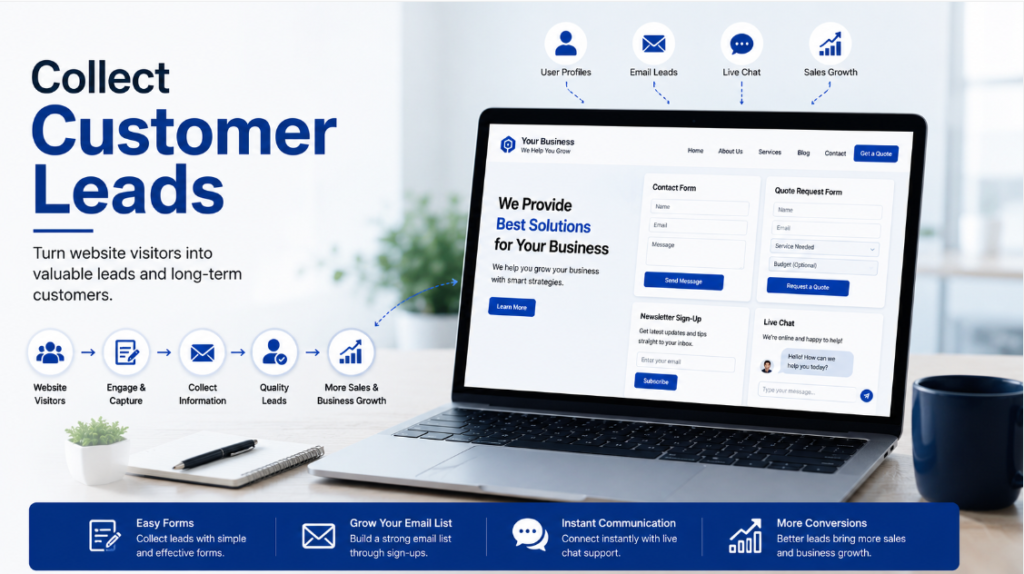
7. Collect Customer Leads
A website is an excellent tool for generating leads.
By adding features such as:
- Contact Forms
- Quote Request Forms
- Newsletter Sign-Up
- Live Chat
you can collect customer information and respond to inquiries quickly. This helps increase sales opportunities and build long-term customer relationships.
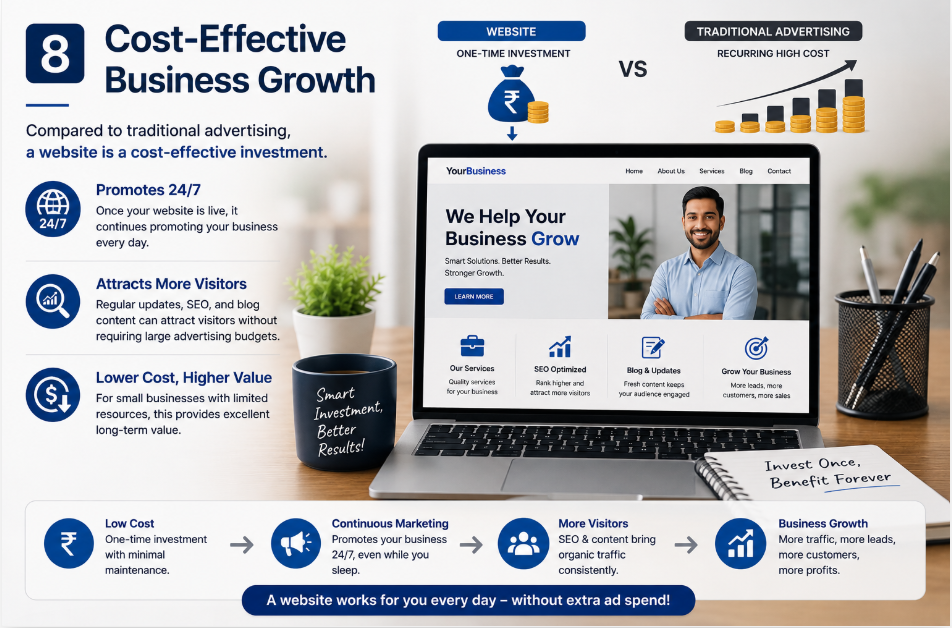
8. Cost-Effective Business Growth
Compared to traditional advertising, a website is a cost-effective investment.
Once your website is live, it continues promoting your business every day. Regular updates, SEO, and blog content can attract visitors without requiring large advertising budgets.
For small businesses with limited resources, this provides excellent long-term value.
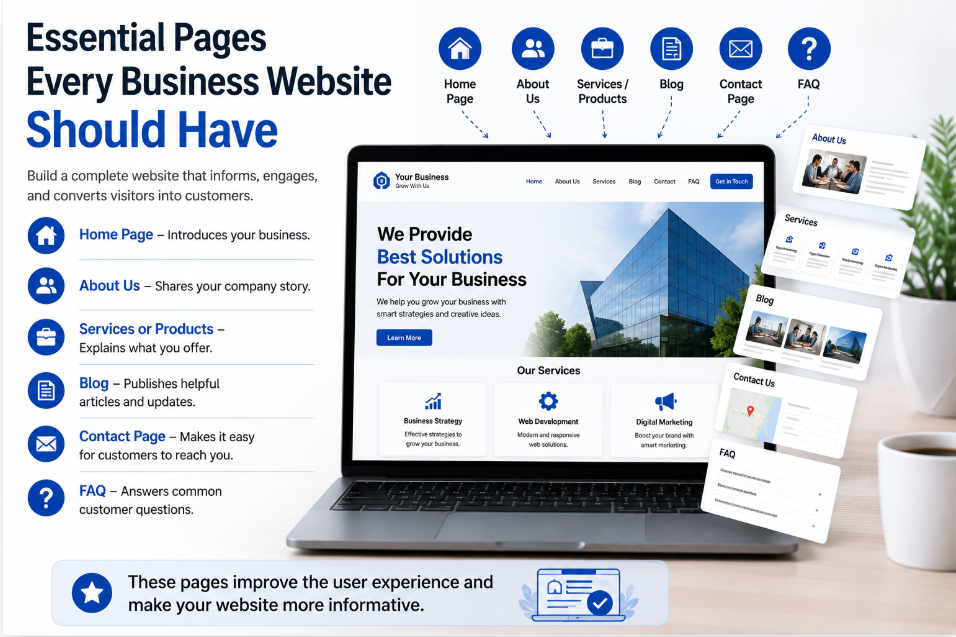
Essential Pages Every Business Website Should Have
A professional business website should include:
- Home Page – Introduces your business.
- About Us – Shares your company story.
- Services or Products – Explains what you offer.
- Blog – Publishes helpful articles and updates.
- Contact Page – Makes it easy for customers to reach you.
Conclusion
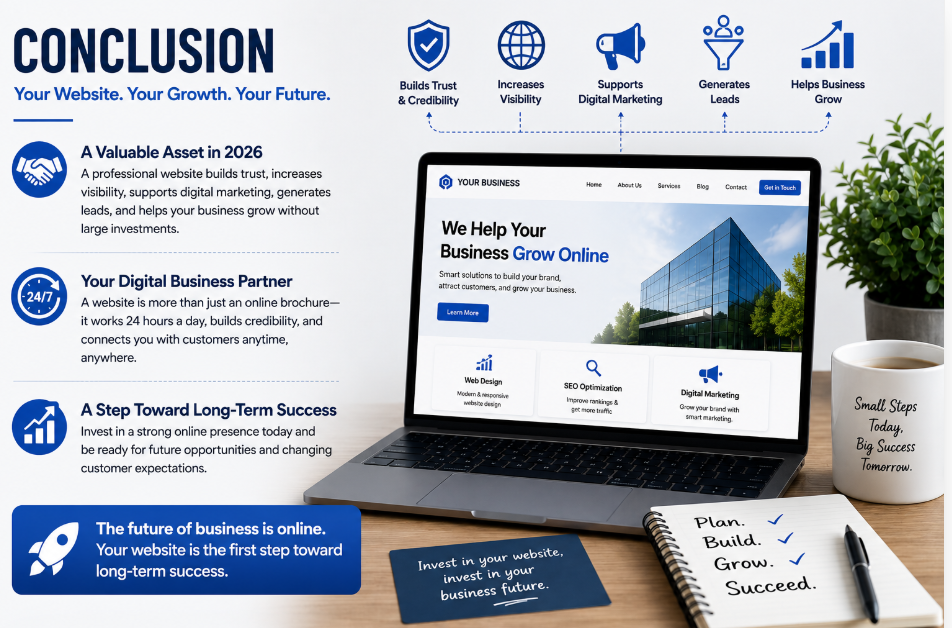
In 2026, a professional website is one of the most valuable assets for any small business. It builds trust, increases visibility, supports digital marketing, generates leads, and helps businesses grow without large investments.
A website is more than just an online brochure—it is your digital business partner that works 24 hours a day. Businesses that invest in a strong online presence today will be better prepared for future opportunities and changing customer expectations.
If you own a small business, now is the perfect time to create a professional website and establish a strong digital presence. The future of business is online, and your website is the first step toward long-term success.